
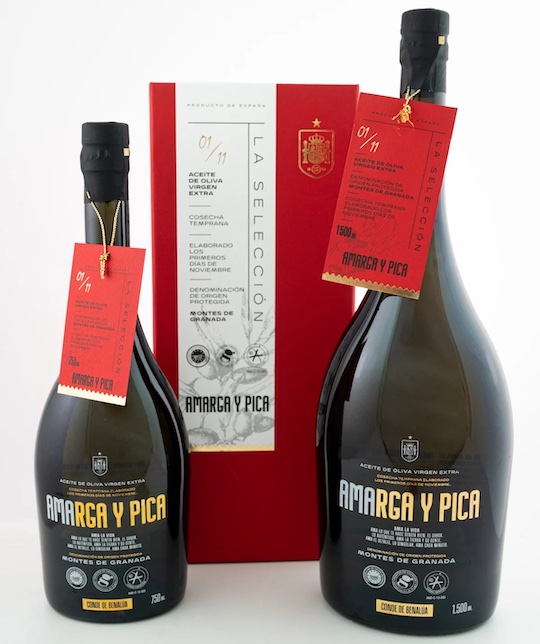
Conde de Benalúa, Amarga y Pica, due to its idiosyncrasy, initiative, entrepreneurship, way of working, nature and way of behaving, is a unique olive mill, whose peculiarity makes it totally singular, forming an exclusive category of cooperative, within the almost 14 thousand olive mills that currently exist on the planet, that is one of the main conclusions of the Report entitled «Strategic Analysis of the Olive Oil Productive Dimension, Business Model and Comparison with other Cooperatives and Industries«, carried out by the team of Juan Vilar Consultores Estratégicos.
In Spain there is a predominance of olive cooperative companies. They represent 50% of the number of mills and 65% of the milling capacity.
In an environment such as the current one, in which the price of inputs has increased exponentially, together with the fall in production to levels similar to a third of the nominal capacity, have plunged the whole sector into a critical situation due to two fundamental factors: on the one hand, the increase in costs, and on the other hand, the fall in income, which has had a clear impact, resulting in a decrease in net income, as well as in the global turnover, which could be estimated at a fall of more than 2,000 million euros throughout the country. 2 billion euros in Spain as a whole. The rise in interest rates has also contributed to this.
In the area of olive oil mills, there have been two effects: on the one hand, the cooperative processing plants, due to the fall in production and the increase in the cost of inputs, have seen an increase in their share of expenses per kilogram of olives, i.e., less kilograms and similar or higher costs. This fact, as in the previous case, has also deteriorated the farmer’s net income. If we refer to industrial olive oil mills, they have their greatest ally in generating net income in volume.
With the lack of volume, there has been a cannibalization in the search for olives, which has further increased the competitiveness between each of these elements, and which has sometimes collaterally affected the mills, limiting their production of low hill olives. This environment of excessive competition has also contributed to reduce the benefits of this link, causing negative economic results in many cases.
Faced with this situation, the cooperative societies intensify their activity in such a way that it has a positive impact on the net income of the farmer member, or harvester.
An example of the above is the Sociedad Cooperativa Conde de Benalúa, located in Benalúa de las Villas, Granada. It has developed a business model that has been able to adapt to the demands of its members and customer orientation to meet their needs. It has a daily milling capacity of 1,400 tons of olives, milling an average of approximately 35 million kg of olives each season and obtaining productions of over 7 million kg of olive oil.
It is a cooperative model based on freedom, i.e., the possibility for the member to sell the olives whenever he/she wants. The minimum unit of sale is each delivery, that is to say, the member, at the price of the day he delivers the olive to the cooperative and when he sees fit, can liquidate all his olive or delivery by delivery. As a result, it is the member who makes the decisions, being more free and less financially dependent on the decisions of his environment.
The main mission of the mill is to guarantee the future of its members, keeping milling costs stable and low for the farmer and offering a fair liquidation price. Thus, Benalúa has kept milling costs stable from 2000 to the present at 0.048 euros per kilogram of olives, which contributes to a considerable improvement in the farmer’s net income.
The farmer perceives profitability thanks to the loyalty he chooses for freedom, since he charges per kilogram of olive well above the average of the sector.
Technology is a fundamental factor, SCA Conde de Benalúa has a pioneering digital transformation project Almazara Conectada 4.0, to achieve maximum efficiency in production processes, quality control and business management.
With the implementation of Almazara Conectada 4.0, not only its suppliers have benefited; other companies in the sector have also benefited by having this company as a reference.
If there is one thing that makes this olive oil cooperative stand out, it is its commitment to marketing based on innovation and sustainability. In addition to marketing their own oils, they also market those produced by other collaborating mills and customers, increasing the commercial offer, both in quantity and variety. With this line of business of selling their own oil as well as oil not produced by them, they manage to increase their bargaining power in the market.
The members have at their disposal different services provided by SCA Conde de Benalúa, among others, the transport of the olives, facilitating the quality and yield controls in external laboratories in a way that guarantees full transparency, and consequent satisfaction with the settlements.
DOWNLOAD EXECUTIVE SUMMARY IN SPANISH