
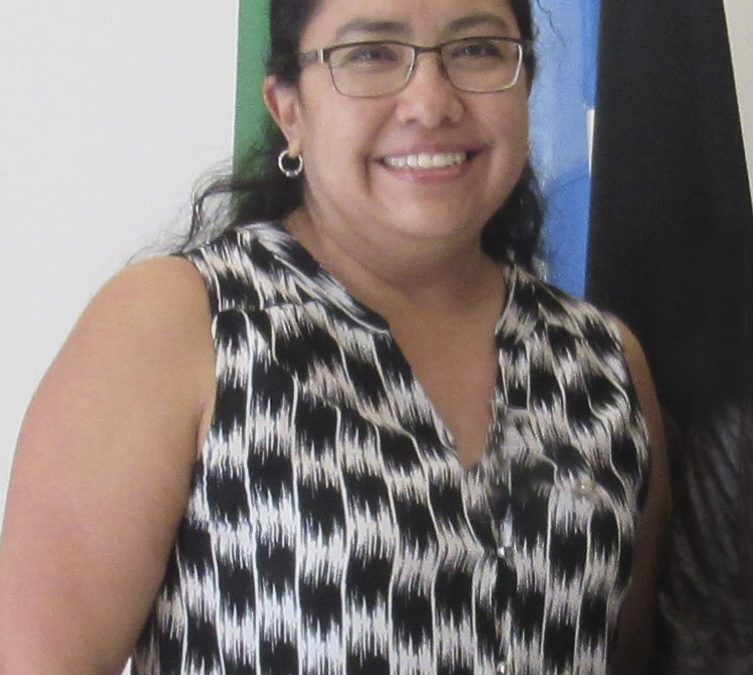
Ursula Cavero Romaña, born in Cusco (Peru), is a Food Industry Engineer by profession, and a promoter of Extra Virgin Olive Oil and Table Olives by vocation. She currently resides in the city of Tacna (Peru), where she began her experience with the world of olives in 2004. She worked for one of the main olive oil producing and marketing companies in Peru. And for the last 5 years she has been the Manager of the Pro Olivo Association, an organization that groups the main producing and exporting companies of table olives and olive oil in Peru.
Ursula has kindly answered some questions that will provide us with an overview of the olive sector, olive oil consumption and consumer behavior in Peru.
What role does olive growing play in Peru?
Peru is one of the main producers of table olives in South America. The olive tree was introduced in the 16th century from Seville (Spain), and adapted quickly to the country’s climate and soil conditions, especially in the southern coastal valleys from Ica to Tacna. In these dry, arid places olive growing is carried out and represents one of the main economic activities, generating economic development and constituting a source of direct and indirect employment in each region.
The national production accounts for about 30 000 hectares, which are mainly of the Creole variety, a traditional Peruvian variety with multiple uses. The zone of greatest growth is concentrated mainly in the Tacna Region, where the olive production has reached very high levels in the last years. This is due to the favorable climatic conditions and to new olive groves beginning their production.
Most of the production is intended for the production of table olives. However, the olive oil industry has had a sustained growth in recent years, achieving an increase in the volumes exported, and especially improving the production of quality olive oils.
What is consumer behavior like?
In terms of consumption, the global trend is to have a healthy and wholesome diet, as well as the quest for quality gastronomic experiences. With extra virgin olive oil both trends converge. Although the consumption of olive oil is not traditional in Peru, it has increased in the last years, and it is estimated that it could continue increasing. In addition to these factors, the economy has improved in many sectors, which has made it possible to access prices presented by olive oil, especially in self-service stores, where the consumer is more aware of its health benefits and is willing to pay for it. However, there is still work to be done on educating or training the final consumers about the health benefits of consuming olive oil.
I consider it important to emphasize that Peruvian gastronomy has experienced a boom in the last years. It has become so popular due to the Peruvian people’s pride in their cultural identity. This has contributed to an increase in olive consumption (natural black) as it is the main ingredient of many fillings of many typical dishes. This increase in the consumption of olives has contributed to introducing many people to the consumption of olive oil.
Where is it bought from? By whom and in what format is it bought?
Olive oil is sold in 3 traditional channels. The main one is the modern channel (self-service) where the highest selling format is a 500 ml glass bottle. Self-service stores directly import olive oil from other producing countries and also commercialize olive oil from national producers. In the traditional channel (distributors and wineries) the highest selling format is the 200 or 250 ml glass bottle. Finally, those in the HORECA channel mainly consume 1 litre PET bottles and 5 litre gallon containers.
How could olive oil consumption increase in Peru?
Although the consumption of extra virgin olive oil has increased in the last years, it is still a product that is segmented to the sector that has purchasing power. On the other hand, Peru produces quality Extra Virgin Olive Oil and in order to increase its consumption, I consider that three aspects should be worked on:
First, the consumer must be educated or trained, have a clear and efficient communication about the benefits that olive oil consumption has for health. This communication is currently very low and is not clear in some cases. It is important to improve the communication between companies and consumers.
Secondly, we must spread knowledge on the benefits of the use of olive oil in cooking. We must disprove that the myth that exists, being that (very deeply-rooted) olive oil is not good for cooking or that food should not be fried with olive oil because it is harmful. We must take advantage of the current situation in which consumers are aware that they must eat healthy and olive oil is the ideal product.
Thirdly, we must promote and value local olive oil production. We must get it through to the consumer that Peru is a producer of quality olive oil.
In this respect, the Pro-Olive Association has been working on these points, such as consumption promotional campaigns in social networks in coordination with the Ministry of Agriculture, olive oil tasting sessions in Expoalimentaria, the main specialized food fair in Peru, Forums with international and national experts, web seminars on the importance of olive oil for health. Likewise, we have hosted the prestigious Sol D’Oro Hemisferio Sur contest, a project carried out in coordination with PromPerú. However, we still consider that more work must be done in order to reach the final consumer, which is mainly from the capital. We have a commitment to continue working on new and greater initiatives in this sense.
Thanks for the opportunity to allow me to introduce Peru as a table olive and olive oil producing country.
My very best regards from Tacna, Peru,
Ursula